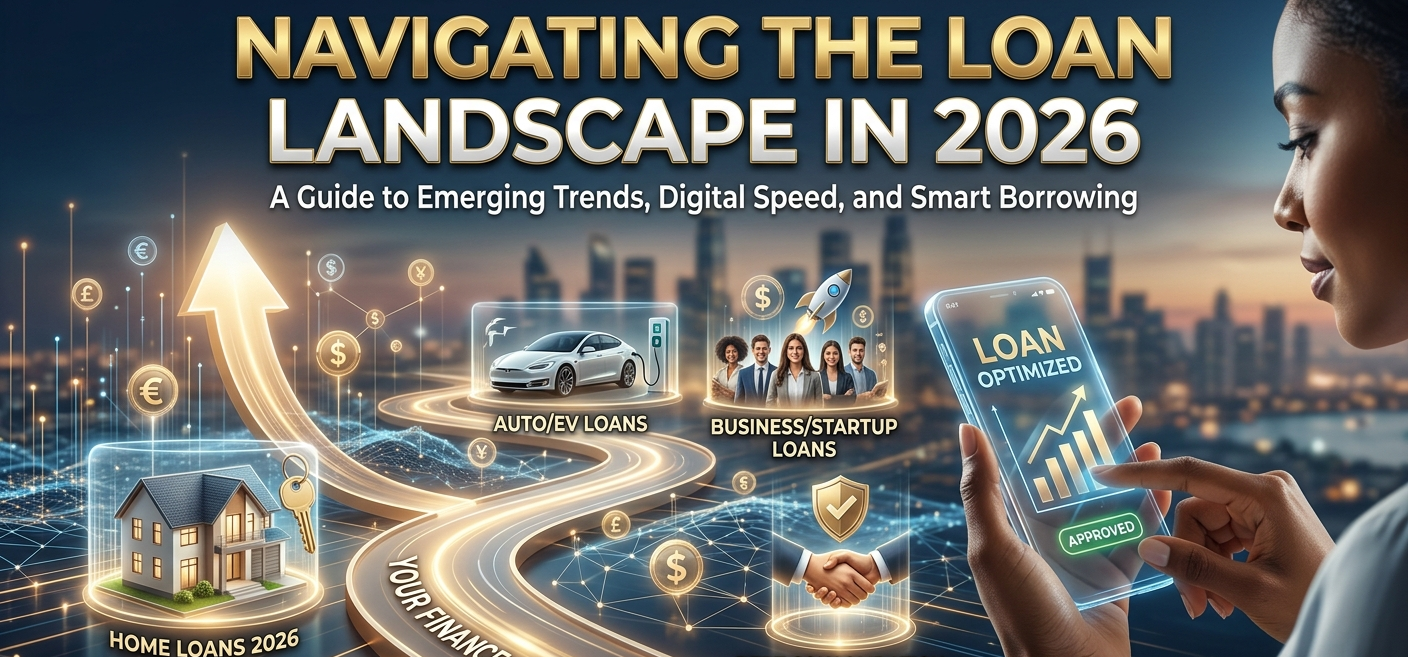
Here is a highly engaging, professional, and SEO-optimized article tailored for 2026. It is designed to grab attention, structure the latest loan trends clearly, and keep readers on your page.
Navigating the Loan Landscape in 2026: Trends, Smart Choices, and How to Get Approved Faster
The financial world has shifted dramatically over the last few years, and the way we borrow money in 2026 is completely different from the traditional bank visits of the past. With the rise of advanced AI underwriting, decentralized digital banking, and personalized financial products, securing a loan today is faster—but it also requires a much smarter strategy.
Whether you are looking to buy your first home, fund a business venture, or consolidate debt, here is your ultimate guide to mastering loans in 2026.
3 Game-Changing Loan Trends in 2026
Before you apply for any financial product this year, you need to understand how the market has evolved:
- Hyper-Personalized Interest Rates: Gone are the days of rigid, one-size-fits-all interest slabs. In 2026, lenders use real-time AI data to analyze your transaction history, utility bill payment consistency, and career stability to offer custom interest rates tailored uniquely to your risk profile.
- Instant Embedded Finance: Loans are no longer just a standalone banking product. From buying an electric vehicle (EV) to booking premium holiday packages, credit options are now seamlessly integrated (“embedded”) directly into checkout pages, offering zero-touch approval in seconds.
- Green Loans Offer Better Perks: Eco-friendly choices are heavily rewarded in 2026. Lenders are actively offering discounted interest rates and waived processing fees on loans meant for solar panel installations, energy-efficient home renovations, and electric vehicles.
Smart Loan Projections: What to Expect Across Categories
Understanding the current lending climate helps you time your borrowing perfectly. Here is a snapshot of the major loan types right now:
| Loan Type | 2026 Average Interest Range | Best Strategy This Year |
| Home Loans | 6.5% – 8.2% | Opt for a hybrid rate; lock in fixed rates if inflation indexes fluctuate. |
| Personal Loans | 9.5% – 14% | Use digital neo-banks for shorter terms to avoid high compounding. |
| Business / Startup Loans | 7.5% – 11% | Leverage government-backed co-lending schemes for lower collateral. |
| EV / Auto Loans | 5.8% – 7.5% | Check for manufacturer ties-ups offering subvention (discounted) rates. |
Step-by-Step: How to Secure the Best Loan Deals in 2026
To get approved with the lowest possible interest rate today, follow this modern borrowing blueprint:
1. Optimize Your “Digital Financial Footprint”
Lenders look at more than just your traditional credit score (like CIBIL or FICO). They analyze your digital footprint. Ensure your UPI transactions are clean, avoid short-term “Buy Now, Pay Later” (BNPL) defaults, and keep your credit utilization ratio below 30%.
2. Compare Neo-Banks vs. Traditional Banks
Traditional institutions offer stability, but digital-first neo-banks are dominating 2026 with ultra-low processing fees and paperless KYC. Always run a side-by-side comparison on aggregation platforms before signing the dotted line.
3. Factor in the True Cost of Borrowing
Don’t get blinded by a low advertised interest rate. Look closely at the Annual Percentage Rate (APR), which wraps up the interest rate, hidden processing charges, legal verification fees, and prepayment penalties.
Pro-Tip for 2026: If you have an existing high-interest loan from a couple of years ago, 2026 is an excellent time to look into a Loan Balance Transfer. Many digital lenders are aggressively buying out old debt by offering a 1% to 1.5% drop in interest rates just to acquire reliable borrowers.
Final Verdict: Borrowing Responsibly
Loans are incredible financial tools if used to build assets (like a home or a business) or to clear high-interest liabilities. In 2026, the golden rule of borrowing remains unchanged: Never let your total monthly EMIs exceed 40% of your net take-home income. Treat credit as a stepping stone, not a safety net.