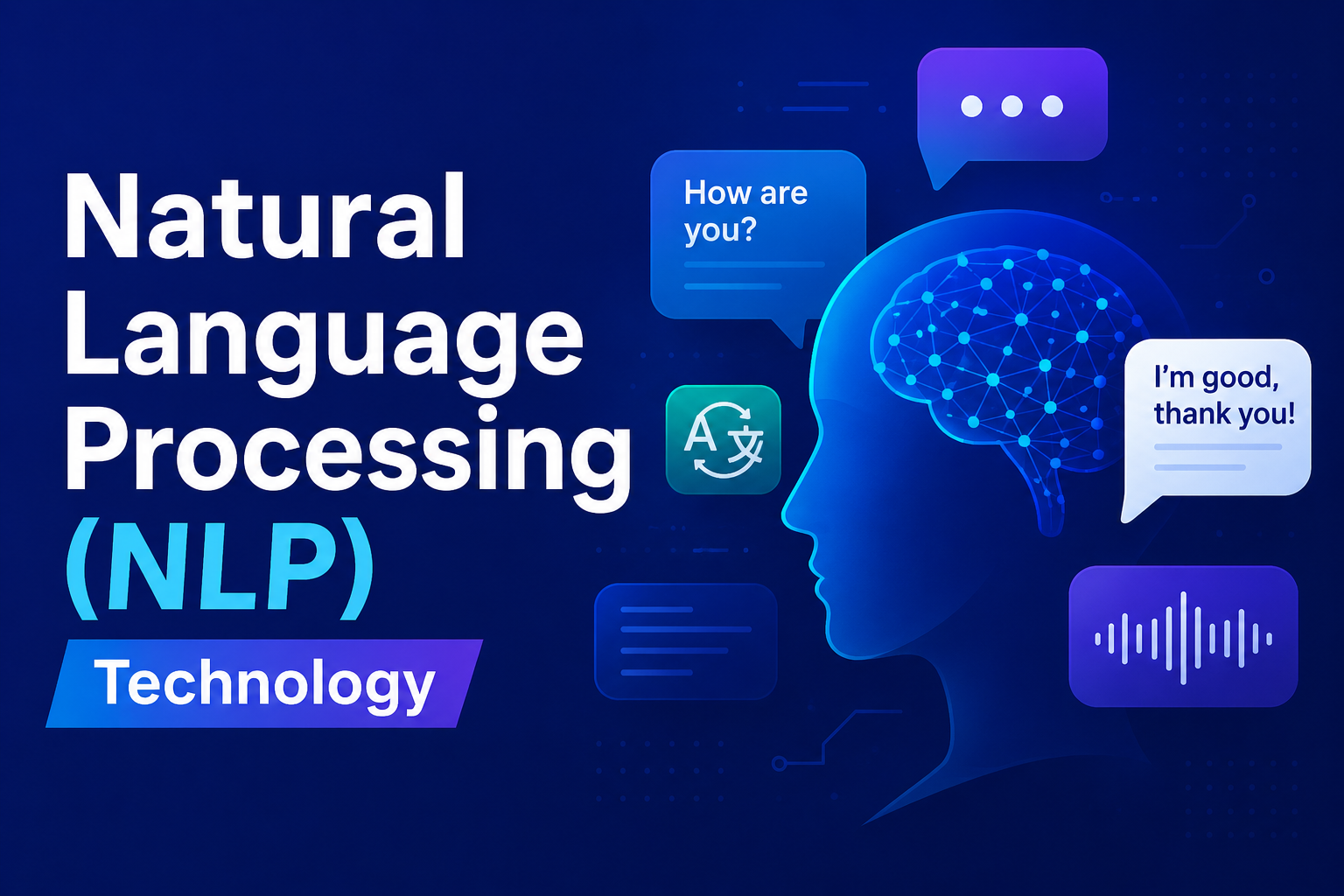
Introduction to Natural Language Processing
Natural Language Processing (NLP) is a subfield of artificial intelligence focused on the interaction between computers and humans through natural language. The main objective of NLP is to enable machines to understand, interpret, and generate human language in a way that is both meaningful and useful. This technology is vital in bridging the gap between human communication and computer understanding, allowing for smoother interactions and more intelligent applications.
NLP encompasses a range of techniques and approaches for processing and analyzing large volumes of natural language data. This includes speech recognition, text analysis, sentiment analysis, and language translation. By leveraging methods from linguistics, computer science, and machine learning, NLP aims to create systems that can comprehend the nuances of human language, including context, intent, and emotion.
The significance of NLP technology has grown significantly due to the increasing reliance on digital communication. As businesses and individuals generate vast amounts of unstructured text data—from emails to social media posts—NLP tools have become essential for extracting insights and fostering better user experiences. For instance, chatbots powered by NLP can interact with customers in natural language, delivering immediate assistance and enhancing overall satisfaction.
Moreover, NLP’s applications extend beyond simple interactions. In fields such as healthcare, finance, and education, NLP is utilized to analyze sentiments in patient feedback, monitor market trends, and personalize learning experiences, respectively. The versatility of NLP technology illustrates its critical role in enhancing efficiency and enabling organizations to make data-driven decisions.
With ongoing advancements in this area, the potential for Natural Language Processing continues to expand, promising a future where machines can fully engage with human language in ways previously thought impossible.
Historical Development of NLP
The evolution of Natural Language Processing (NLP) technology has been a remarkable journey marked by various milestones that have significantly shaped the field. The initial efforts at understanding and processing human language began in the 1950s with rule-based systems, where linguists and computer scientists focused on creating algorithms that followed a rigid set of grammatical rules. Early models were limited in their scope and relied heavily on hand-crafted grammatical structures, making them unable to adapt to the intricacies of natural language.
In the latter part of the 20th century, the introduction of statistical methods revolutionized the field of NLP. Researchers began to leverage large datasets for training models, allowing for more flexible and robust handling of language data. The seminal work by authors like IBM’s team on machine translation in the 1980s marked a significant step forward, as it employed statistical approaches that shifted attention from purely rule-based systems to data-driven methodologies. This transition facilitated foundational models that could learn language patterns directly from examples rather than relying solely on pre-defined rules.
The 1990s brought further advancements with the emergence of machine learning techniques, enabling researchers to improve NLP applications dramatically. Notably, algorithms such as Hidden Markov Models (HMMs) paved the way for better part-of-speech tagging and named entity recognition tasks. Researchers also began exploring the use of neural networks, setting the stage for a new era of development in the 21st century.
The advent of deep learning techniques in recent years has transformed NLP, exemplified by models like Google’s BERT and OpenAI’s GPT series. These architectures employ vast amounts of text to impart contextual understanding, allowing computers to generate, comprehend, and respond to human language with unprecedented accuracy. Researchers and developers continue to push the boundaries of NLP, making it an increasingly integral part of everyday technology, from virtual assistants to sophisticated translation services.
Core Concepts and Techniques in NLP
Natural Language Processing (NLP) is a critical component of artificial intelligence that enables machines to understand, interpret, and generate human language. Several core concepts and techniques serve as the foundation for NLP applications. One of the fundamental processes in NLP is tokenization, which involves breaking text into smaller units, typically words or phrases. This step is essential for further analysis, as it allows algorithms to identify and manipulate textual data more effectively.
Another key concept in NLP is part-of-speech tagging, which assigns grammatical categories such as nouns, verbs, and adjectives to words in a sentence. By understanding the role of each word, systems can better interpret meaning and context. Complementing this is named entity recognition, a technique that identifies and classifies proper nouns in text, such as names of people, organizations, and locations. This capability enhances the understanding of content, facilitating tasks like information extraction and summarization.
Sentiment analysis is another essential NLP technique that involves evaluating the emotional tone of a text. This form of analysis provides insights into public sentiment regarding products, services, or topics, making it invaluable for businesses seeking to gauge customer opinions. To perform these tasks, various techniques and algorithms come into play, categorizing them into supervised and unsupervised learning. Supervised learning uses labeled datasets to train models, while unsupervised learning seeks to identify patterns without labeled input.
Moreover, deep learning approaches, notably recurrent neural networks (RNNs) and transformers, have revolutionized NLP in recent years. RNNs are particularly adept at processing sequential data, making them suitable for language tasks. In contrast, transformers have gained prominence due to their ability to handle long-range dependencies in text, allowing for improved context understanding. Overall, mastery of these core concepts and techniques is fundamental for advancing the capabilities of NLP technology.
Applications of NLP Technology
Natural Language Processing (NLP) technology has become increasingly integral across various sectors, transforming how organizations communicate and process information. One prominent application is found in chatbots, which utilize NLP to understand and respond to user inquiries efficiently. Businesses employ these conversational agents on websites and social media platforms to enhance customer support while providing timely assistance. A notable example is the implementation of chatbots by companies like Sephora, which allow customers to receive personalized product recommendations.
Virtual assistants such as Amazon’s Alexa and Apple’s Siri also exemplify the successful use of NLP, enabling users to interact using natural language commands. These assistants utilize machine learning algorithms to comprehend speech patterns, allowing for tasks such as setting reminders, playing music, or providing weather updates. The growing popularity of these tools highlights how NLP enhances user experience and streamlines everyday activities.
Text summarization represents another critical application in NLP, where algorithms process large volumes of text and distill the essential points. This technology is particularly useful for news agencies and academic institutions that need rapid comprehension of extensive documents. For instance, research organizations often implement NLP-driven summarization tools to facilitate quicker decision-making based on current literature.
Machine translation, widely recognized through tools such as Google Translate, leverages NLP to automatically convert text from one language to another. This application fosters global communication and accessibility, breaking down language barriers for travelers and international businesses alike. The technology behind machine translation continually evolves, with innovations leading to increasingly accurate translations.
In addition, information extraction systems utilize NLP to identify relevant data from unstructured text, aiding industries like finance and healthcare. For example, financial institutions apply NLP to evaluate news articles and social media chatter to gauge market sentiment and forecast trends. These applications showcase just a few of the diverse ways NLP technology is harnessed, epitomizing its versatility in various fields.
Challenges and Limitations of NLP
Natural Language Processing (NLP) technology has made significant strides in recent years; however, it still faces a multitude of challenges and limitations that impact its efficiency and accuracy. One of the foremost challenges is the inherent ambiguity present in human language. Words can have multiple meanings depending on context, leading to misunderstandings that NLP systems must navigate. For instance, the word “bank” could refer to a financial institution or the side of a river, and without sufficient context, an NLP model may struggle to determine the correct interpretation.
Another significant obstacle is the difficulty in parsing dialects and slang. Language varies widely across regions, cultures, and social groups, frequently incorporating unique idioms and linguistic structures. This variation complicates the ability of NLP systems to understand and process language effectively. For example, phrases that are commonplace in one dialect may be entirely foreign in another, limiting the applicability of NLP tools across diverse language users.
Context understanding also poses a challenge for NLP technologies. Many systems can analyze individual sentences but struggle with maintaining coherence across longer texts. Nuances such as sarcasm or humor often elude comprehension due to their reliance on contextual cues beyond the words themselves. Therefore, systems can misinterpret the sentiment or meaning if they fail to capture broader narratives.
Additionally, biases in the data used to train NLP models can lead to skewed results. If the training data reflects historical prejudices or lacks diversity, the resulting NLP applications may perpetuate these biases, impacting their fairness and accuracy. This problem highlights the importance of using well-rounded and representative datasets to train NLP systems effectively.
Recent Trends and Innovations in NLP
Natural Language Processing (NLP) technology has witnessed significant advancements in recent years, driven by both research and practical applications in various fields. One of the most notable trends is the rise of transfer learning, a methodology that enables models to leverage knowledge acquired from one task to enhance performance on another. This approach has proven particularly effective in NLP, where large models can be fine-tuned on specific datasets, leading to improved efficiency and accuracy.
Pre-trained language models, such as BERT (Bidirectional Encoder Representations from Transformers) and GPT (Generative Pre-trained Transformer), have revolutionized the field by providing a robust foundation for various NLP tasks. BERT’s ability to understand context in both directions allows it to outperform traditional models in tasks like question answering and sentiment analysis. Similarly, GPT models have gained attention for their ability to generate coherent and contextually relevant text, making them valuable for applications ranging from content creation to chatbots.
Another emerging trend in the NLP landscape is the growing focus on multilingual capabilities. As globalization increases, the demand for tools that can effectively process and understand multiple languages has surged. Innovations in multilingual NLP aim to break down language barriers, enabling businesses to reach wider audiences and improve customer engagement across different linguistic contexts.
In addition to these technical advancements, ethical considerations associated with NLP and artificial intelligence continue to be paramount. As the capabilities of NLP technology grow, so too do concerns related to bias, privacy, and the potential misuse of language models. Developers and researchers are increasingly prioritizing responsible AI development, striving to create systems that are not only powerful but also transparent and fair in their operations. These trends reflect a maturing field, ready to address contemporary challenges while harnessing the potential of NLP to transform the way we interact with technology.
Future Outlook of NLP Technology
The future of Natural Language Processing (NLP) technology promises significant advancements driven by ongoing research and the evolving needs of various sectors. As machine learning and artificial intelligence continue to improve, NLP systems are expected to become increasingly proficient in understanding context, emotion, and intent behind human communication. Enhanced algorithms and models, such as transformer-based architectures, will likely play a pivotal role in achieving this level of sophistication.
Emerging research areas, including low-resource language processing and multilingual NLP, aim to break down barriers in communication across diverse populations. By developing models that can function effectively in multiple languages, NLP technology will be crucial in fostering global connectivity and cooperation. This becomes especially vital in addressing worldwide challenges, such as misinformation and disinformation, where reliable NLP systems can help filter and validate information sources more accurately.
NLP is also predicted to integrate more deeply with immersive technologies, such as augmented reality (AR) and virtual reality (VR). This synergy can enhance human-computer interaction by enabling natural dialogue and intuitive communication within virtual environments. Imagine virtual customer service representatives who can engage in conversations seamlessly, or educational tools that adaptively respond to student inquiries in real-time, providing tailored feedback that enriches the learning experience.
Furthermore, the increasing focus on ethical considerations surrounding AI will necessitate improved transparency in NLP models. As these technologies evolve, establishing frameworks for responsible usage and addressing biases inherent in algorithmic decision-making will become paramount. The future of NLP technology not only hinges on its technical advancements but also on its ability to align with societal values and address human needs effectively.
Getting Started with NLP: Tools and Resources
Natural Language Processing (NLP) is a rapidly growing field that presents a wealth of opportunities for researchers and developers alike. To embark on your NLP journey, it is essential to familiarize yourself with the various tools and resources available. One of the most widely used libraries for beginners is the Natural Language Toolkit (NLTK). This library offers a comprehensive set of functions and easy-to-use interfaces for handling tokenization, stemming, and parsing, making it an excellent starting point for those new to NLP.
Another noteworthy library is SpaCy, which excels in industrial applications. SpaCy is designed for speed and efficiency, enabling users to quickly implement NLP solutions for tasks such as named entity recognition, part-of-speech tagging, and text classification. In addition, SpaCy provides a well-documented API, making it user-friendly for both novices and advanced users.
For those interested in cutting-edge NLP applications, Hugging Face’s Transformers library has gained significant traction. This library facilitates the use of state-of-the-art models such as BERT and GPT-3, allowing developers to leverage pre-trained models for a range of functions, including language translation and summarization. With Hugging Face’s user-friendly documentation, practitioners can adopt complex models without extensive prior knowledge.
In addition to these libraries, numerous online courses and tutorials can help fast-track your understanding of NLP. Platforms like Coursera, edX, and Udemy offer specialized courses that cover a variety of NLP concepts, tools, and methodologies. You can also explore numerous open-source projects on GitHub, which provide practical examples and invite collaboration, fostering a hands-on learning experience. Community forums such as Reddit and Stack Overflow can further support your explorations by connecting you with practitioners who share valuable insights.
Conclusion
In this blog post, we have explored various dimensions of Natural Language Processing (NLP) technology and its transformative capabilities. This field, which lies at the intersection of linguistics, computer science, and artificial intelligence, has made significant strides over the past few years, demonstrating its potential to enhance communication between humans and machines. By leveraging algorithms and data analysis, NLP enables computers to understand, interpret, and respond to human language in a way that is both meaningful and contextually relevant.
The applications of NLP technology are vast and varied, encompassing sectors such as healthcare, customer service, finance, and education. For instance, in healthcare, NLP is used to analyze patient data, providing insights that can lead to improved care. In customer service, chatbots and virtual assistants have become indispensable, thanks to their ability to process and respond to customer inquiries swiftly. The financial sector employs NLP to enhance risk management and detect fraudulent activities by analyzing vast amounts of unstructured data.
As we advance further into the digital age, the importance of ongoing research and development in NLP cannot be overstated. Innovations in this domain hold the key to addressing challenges related to language barriers, data privacy, and ethical considerations surrounding AI technology. It is essential for experts, policymakers, and academia to collaborate in refining NLP models and algorithms to ensure they are not only effective but also equitable and responsible.
In conclusion, the impact of Natural Language Processing technology on society is significant and growing. As it continues to evolve, its integration into everyday applications will enhance human-computer interaction, ultimately leading to more intelligent and adaptable systems. The future of NLP promises exciting possibilities that could revolutionize the way we communicate and engage with technology.