Introduction to Deep Learning
Deep learning, a subset of artificial intelligence (AI), has garnered significant attention over the past decade due to its remarkable capabilities and versatility. At its core, deep learning utilizes neural networks, which are algorithms inspired by the human brain’s structure and function. This approach allows computers to process and learn from large volumes of unstructured data, making it a powerful tool in the realm of machine learning.
The inception of deep learning can be traced back to the 1940s, when the initial concepts of neural networks were introduced. However, it wasn’t until the advent of more advanced computational power and expansive datasets in the 21st century that deep learning truly began to flourish. Unlike traditional machine learning models that often rely on feature engineering and manual processing, deep learning algorithms automatically extract features from raw data, leading to improved accuracy and efficiency in various tasks.
One of the primary distinctions between deep learning and classical machine learning is the depth of models. Deep learning models consist of multiple layers of neurons, enabling them to capture intricate patterns and relationships in the data. This multilayered architecture is particularly adept at handling complex tasks such as image and speech recognition, natural language processing, and even autonomous driving. The ability to automatically learn and adapt to new information without extensive human intervention has positioned deep learning as a revolutionary technology across numerous industries.
The applications of deep learning are vast, spanning from healthcare, where it aids in diagnoses and treatment predictions, to finance, where it enhances fraud detection mechanisms. As the technology continues to evolve, it presents exciting opportunities for innovation, pushing the boundaries of what machines can accomplish. Understanding the foundational principles of deep learning is essential for those looking to leverage this transformative technology in their respective fields.
How Deep Learning Works
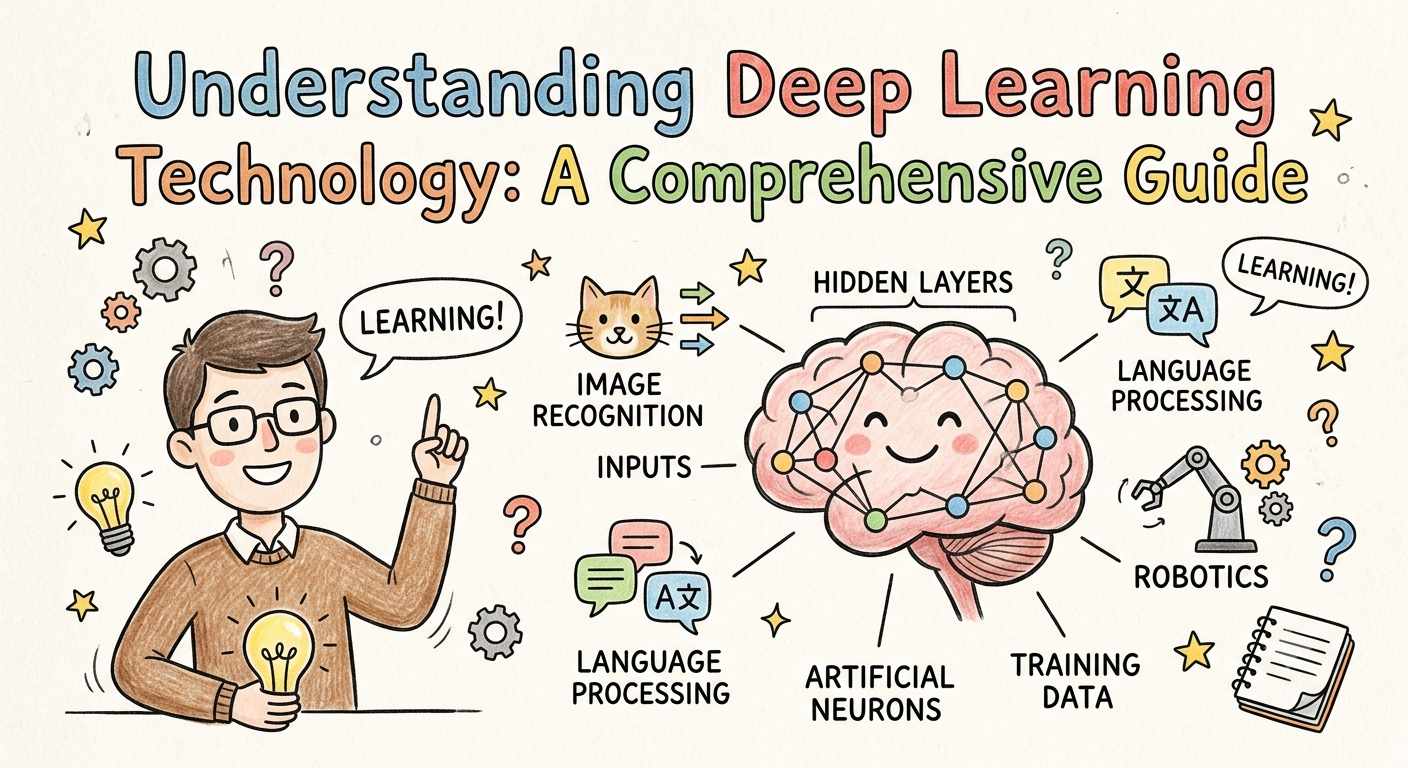
Deep learning is a subset of artificial intelligence, primarily focused on algorithms that attempt to model high-level abstractions in data through the use of multiple processing layers. At its core, deep learning relies on neural networks, which mimic the way the human brain operates. These networks consist of interconnected nodes, or neurons, organized in layers: an input layer, one or more hidden layers, and an output layer. Each node in these layers is responsible for processing input and passing on its output to subsequent nodes, creating a complex web of connections that allows the network to learn from data.
Each connection between nodes is associated with a weight that signifies the strength of the connection. During the training phase, these weights are adjusted to minimize the error in the network’s predictions. This adjustment process is critical and is typically achieved through an algorithm known as backpropagation. Backpropagation calculates the gradient of the loss function, which measures how far off a network’s predictions are from the actual outcomes. By propagating this error back through the network, the algorithm can iteratively update the weights to improve accuracy.
Activation functions play a pivotal role in determining whether a neuron should be activated or not, effectively introducing non-linearity into the network. Common activation functions include the sigmoid function, hyperbolic tangent (tanh), and rectified linear unit (ReLU). These functions help deep learning models learn complex patterns by enabling the network to make decisions based on weighted inputs. The process continues until the model converges, meaning that further training will yield minimal changes in performance. This intricate yet elegant process of training and optimizing a deep neural network is what allows deep learning technology to tackle a vast array of real-world problems, making it a powerful tool in the data-driven landscape.
Types of Deep Learning Architectures
Deep learning technology encompasses various architectures, each tailored for specific tasks and challenges. Among the most prominent are feedforward neural networks, convolutional neural networks (CNNs), recurrent neural networks (RNNs), and transformers. Understanding the characteristics of these architectures aids in selecting the appropriate model for a given application.
Feedforward neural networks are the most basic type of deep learning architecture. In these networks, information moves in only one direction—from the input nodes, through the hidden layers, and finally to the output nodes. This simplicity makes them suitable for straightforward tasks, such as function approximation and classification problems. However, their inability to maintain contextual information limits their efficiency in processing sequential data.
In contrast, convolutional neural networks (CNNs) have revolutionized the field of image processing. Designed to recognize spatial hierarchies in images, they employ convolutions and pooling layers to extract features effectively. CNNs excel in tasks such as image classification, object detection, and video analysis. However, they may underperform when handling non-image data or sequences where temporal dependencies are crucial.
Recurrent neural networks (RNNs) are specifically designed to process sequential data, making them invaluable in natural language processing and time-series analysis. By utilizing feedback loops, RNNs can maintain information across different time steps. However, they often face challenges such as vanishing gradients, which may hinder their learning capabilities when dealing with long sequences.
Transformers represent a significant advancement in deep learning architectures, particularly for tasks requiring contextual understanding across long sequences, such as language translation. Utilizing mechanisms like self-attention, transformers can weigh the relevance of each token, thus capturing complex relationships in data without being limited by sequence length. While they require considerable computational resources, their effectiveness in numerous applications demonstrates their importance in the evolving landscape of deep learning.
Applications of Deep Learning
Deep learning technology has emerged as a transformative force across various industries, effectively addressing complex challenges and enhancing operational efficiency. The application of deep learning spans diverse fields including image and speech recognition, natural language processing, healthcare diagnostics, and autonomous vehicles, among others.
One of the most notable applications of deep learning is in image recognition. Computer vision systems utilize deep neural networks to identify and classify objects within images. For instance, companies like Google and Facebook employ advanced deep learning algorithms to improve their image search capabilities and automate photo tagging, demonstrating the technology’s potential to process and analyze massive datasets with remarkable accuracy.
In addition to image recognition, speech recognition has revolutionized how humans interact with technology. Personal assistants such as Apple’s Siri and Google Assistant leverage deep learning techniques to understand and respond to spoken commands. By training on large datasets of voice samples, these systems can identify language patterns and nuances, leading to an enhanced user experience.
Natural language processing (NLP) is another crucial area where deep learning plays a pivotal role. By employing algorithms capable of understanding context and nuance within text, applications such as chatbots and sentiment analysis tools have improved markedly. Companies like OpenAI and Grammarly utilize deep learning models to analyze text, offering users real-time feedback and assistance.
In the healthcare sector, deep learning has facilitated significant advancements, particularly in diagnostics. MRI and CT images can be analyzed using convolutional neural networks to help radiologists detect anomalies with higher precision. An example includes IBM Watson, which uses deep learning to provide insights and aid in oncological treatments, showcasing how the technology is enhancing patient outcomes.
Lastly, the automotive industry has seen a rapidly growing application of deep learning in developing autonomous vehicles. Companies like Tesla utilize sensor data processed by deep learning algorithms to enable cars to recognize traffic signals, pedestrians, and other road conditions, pushing the boundaries of vehicle automation.
Overall, the multifaceted applications of deep learning illustrate its profound impact on solving complex problems across various sectors, signifying its transformative potential in the technology landscape.
Challenges in Deep Learning
Deep learning, a subset of machine learning, has gained significant traction in various sectors, including healthcare, finance, and autonomous systems. However, the adoption of deep learning technologies comes with a multitude of challenges that need to be addressed for their successful implementation.
One predominant challenge in deep learning is the requirement for vast amounts of data for model training. Deep learning models, particularly those employing neural networks, thrive on large datasets to learn effectively. However, gathering sufficient, high-quality training data can be both time-consuming and resource-intensive. In many cases, data may be scarce or difficult to obtain, which significantly hampers the model’s ability to generalize well to new, unseen scenarios.
Another critical issue is the demand for significant computational power. Training deep learning models can involve intensive processing, requiring specialized hardware such as GPUs or TPUs. This demand can impose heavy costs on organizations looking to leverage deep learning, creating barriers to entry for smaller entities and startups. Additionally, the efficiency of these computational resources can often lead to environmental concerns, as the energy requirements become increasingly substantial.
Overfitting is another challenge that practitioners must contend with when developing deep learning models. This phenomenon occurs when a model learns the training data too well, capturing noise rather than relevant patterns. As a result, the model may perform exceptionally on training datasets but poorly on validation sets, limiting its effectiveness in real-world applications. Regularization techniques and proper validation are essential to mitigate this risk.
Lastly, the so-called “black box” problem poses significant apprehensions regarding transparency and interpretability. The complexity of deep learning models makes it challenging for users to understand how decisions are made. This lack of interpretability can lead to ethical considerations, especially related to bias embedded in training datasets. As organizations deploy AI solutions, addressing these ethical dilemmas is crucial to ensure responsible and fair use of deep learning technologies.
Deep Learning Tools and Frameworks
Deep learning has gained significant traction in recent years, leading to the development of various frameworks and tools designed to streamline the process for practitioners. Among the most prominent of these is TensorFlow, an open-source framework developed by Google. TensorFlow offers flexibility and scalability, making it suitable for both production and research environments. Its ability to perform model training and deployment on a wide range of platforms, including mobile devices and cloud services, sets it apart in the deep learning landscape.
Another well-regarded framework is PyTorch, developed by Facebook’s AI Research lab. PyTorch is particularly favored for its dynamic computation graph, which allows for greater flexibility during model development. This feature is particularly beneficial for researchers and developers who require immediate feedback and iterative refinement of their models. PyTorch’s user-friendly interface and extensive library functions have made it a popular choice among both novice and experienced deep learning practitioners.
Keras, often considered a high-level API for building and training deep learning models, is built on top of other frameworks such as TensorFlow. Its simplicity and ease of use make it an excellent choice for beginners looking to explore deep learning. Keras abstracts many of the complexities chains programmers typically face while still allowing advanced users to fine-tune their models. It is particularly well-suited for rapid prototyping and experimentation.
Other notable tools include Caffe and MXNet. Caffe is known for its speed and efficiency, suitable for projects requiring quick deployment, while MXNet provides scalability for deploying deep learning models across distributed systems. Understanding the unique features and benefits of each tool can help practitioners choose the most appropriate framework for their specific deep learning applications, ensuring optimal performance and results.
Future Trends in Deep Learning
The domain of deep learning is experiencing rapid evolution, and several future trends are poised to shape its trajectory. One prominent trend is the advancement in hardware technologies designed specifically to enhance deep learning processes. Graphics Processing Units (GPUs) and specialized hardware like Tensor Processing Units (TPUs) continue to improve, enabling faster training of complex models. Additionally, the emergence of neuromorphic computing, which mimics the neural structure of the human brain, promises to revolutionize the efficiency and performance of deep learning models, allowing them to tackle more sophisticated tasks than ever before.
Moreover, the integration of deep learning with other artificial intelligence technologies is anticipated to gain momentum. For instance, the synergies between deep learning and reinforcement learning may lead to breakthroughs in autonomous systems, enhancing their ability to make decisions in dynamic environments. This fusion could be particularly significant in fields such as robotics, natural language processing, and computer vision, as more robust models are developed by harnessing the strengths of multiple AI paradigms.
As the field continues to progress, there is an increasing emphasis on explainable AI (XAI), addressing concerns related to the opacity of complex deep learning models. Researchers and practitioners are working diligently to create methodologies that demystify the decision-making processes of these systems. Enhanced interpretability will not only boost trust among users but could also be critical for compliance with legal and ethical standards that govern the deployment of deep learning systems in sensitive areas such as healthcare and finance.
Additionally, the societal implications of deep learning cannot be overlooked. As these technologies proliferate across industries, there will be a growing need to consider ethical implications, including bias in algorithms, privacy concerns, and employment impacts. As the landscape inevitably evolves, it is essential for stakeholders to engage in meaningful discussions about the direction of deep learning and its role in shaping our future.
Getting Started with Deep Learning
Deep learning, a subset of machine learning, has gained immense popularity due to its ability to process vast amounts of data and provide significant insights. For those interested in beginning their journey with deep learning, establishing a solid foundation is crucial. The following recommendations will help you get started effectively.
First and foremost, it is important to understand the theoretical concepts behind deep learning. Numerous online courses are available that cater to different learning styles. Platforms such as Coursera, edX, and Udacity offer comprehensive courses often designed by renowned universities and institutions. These courses typically cover essential topics, including neural networks, optimization techniques, and various architectures such as convolutional and recurrent networks. Complementing these courses with a few well-regarded books, such as “Deep Learning” by Ian Goodfellow and “Neural Networks and Deep Learning” by Michael Nielsen, can provide deeper insights into the algorithms and mathematics driving deep learning technology.
Engaging with community forums is another effective method for enhancing your learning. Websites like Stack Overflow and dedicated deep learning discussion boards offer support where you can ask questions, share experiences, and learn from others facing similar challenges. Participating in local or online meetups can also help build connections with like-minded individuals and professionals in the field.
In addition to theoretical learning, practical experience is paramount. Start by working on small projects that allow you to apply the concepts you’ve studied. Popular datasets, such as MNIST for handwritten digit recognition, provide an ideal starting point. As you gain confidence, consider exploring more complex datasets and tasks, such as image classification or natural language processing. More advanced projects may involve applying transfer learning or developing custom neural network architectures. By continuously experimenting and pushing the boundaries of your knowledge, you’ll not only solidify your understanding but also cultivate a portfolio that showcases your skills in deep learning.
Conclusion
Deep learning technology stands as a pivotal component of modern artificial intelligence, shaping a multitude of applications across various sectors. Throughout this guide, we have examined the fundamental principles of deep learning, highlighting its capacity to analyze vast datasets and enhance predictive accuracy. As this technology continues to evolve, its impact on industries such as healthcare, finance, and autonomous systems cannot be overstated. The ability of deep learning algorithms to sift through unstructured data and derive meaningful insights positions them at the forefront of technological advancements.
One of the critical takeaways from our exploration is the necessity for practitioners and enthusiasts alike to remain informed about the latest trends and developments in deep learning. The field is rapidly changing, with new models, architectures, and training techniques emerging consistently. By staying updated, individuals can harness the full potential of deep learning, applying it to solve complex problems or improve existing systems. This proactive approach is essential for those looking to leverage deep learning in their studies or professional endeavors.
Moreover, as organizations increasingly seek to integrate deep learning into their operations, understanding its applications becomes crucial for future success. Professionals are encouraged to consider how these technologies can be incorporated into their workflows to drive innovation and efficiency. Whether through direct implementation or collaborative projects, engaging with deep learning offers a pathway to enhance performance and maintain competitiveness in an ever-evolving landscape.
In summary, the significance of deep learning technology in the realm of artificial intelligence is undeniable. By grasping its fundamentals and closely following advancements, individuals and organizations can navigate the complexities of this field effectively, ensuring they remain at the cutting edge of technological progress.